
The Woman Behind Invisible Protection™: Kenyatta McKinnon Shares Her Story

In the world of executive protection, true security is measured not only by visible safeguards but by the confidence and freedom they provide. Kenyatta McKinnon has built her reputation on helping ultra-high-net-worth individuals and their families navigate an increasingly complex security landscape through discreet, intelligence-led protection. In this exclusive Risk Averse Connections Q&A, she shares the experiences, principles and insights that have shaped her approach to personal security, leadership and protecting clients without compromising their privacy or way of life.

👤 Background & Career Journey
1. Your career spans law enforcement, executive protection, authorship and advocacy. Looking back, what experiences have most shaped the leader you are today?
“Everything I do traces back to two places: the badge, and my own story. Twenty-five-plus years in law enforcement with the Fulton County Sheriff's Office taught me how to read a room, read a threat, and read a person before either one escalates. But it was surviving domestic violence that taught me my "why" that was what mattered. I know what it feels like to be unsafe in your own home, to minimize what's happening to you because you don't think anyone will believe you or protect you. That combination the tactical training and the lived experiences is what shaped me. I don't lead from theory. I lead from having been on both sides of the door.”
2. Was there a defining moment that made you realize traditional executive protection wasn't meeting the needs of the clients you wanted to serve?
“Yes. I kept seeing the same pattern — protection that was built for a certain type of client, usually male, usually corporate, and it treated safety like a wall you build around someone. But the women I wanted to serve weren't looking for a wall. They were looking for their life back. They wanted to walk into a room, be present with their kids, run their business — without four large men in dark suits announcing to the world "something is wrong here." That gap, between protection and freedom, is where Top Security Services was birthed.”
3. You've transformed personal experiences into a mission of protection and empowerment. How have those experiences influenced the way you lead and serve others?
"I lead with the belief that safety is a form of dignity. When you've lived through abuse, you understand that fear isn't just physical — it's the noise in your head that never turns off. So I don't just train my team to protect a body. I train them to protect a person's peace. Every client I serve, I see a piece of who I used to be, and I build the kind of protection I wish someone had built for me.”
🛡️ Executive Protection & Personal Security
4. Invisible Protection™ has become synonymous with your brand. What inspired this philosophy and how does it challenge conventional thinking within executive protection?
“Invisible Protection™ came from watching traditional security create the very anxiety it was supposed to eliminate. Visible security tells the world, and sometimes the client herself, "you should be afraid." I wanted to flip that. My philosophy is that the best protection is the protection you don't feel — it's there, it's trained, it's ready, but it never interrupts your life. That challenges an entire industry built on the idea that presence equals safety. I believe prevention and precision equal safety. Presence is just one tool, not the whole plan.”
5. One of your core messages is that security should fit someone's life — not change it. Why is that principle so important to you?
“Because I've seen what it costs a woman to feel like a prisoner in the name of being protected. If my client can't take her kids to the park, can't run her errands, can't show up to her own event without it feeling like a production, then I haven't protected her — I've just relocated her fear. Security should move with your life, not rearrange it.”
6. The Kenyatta Method™ combines awareness, intuition and behavioral analysis. Without revealing operational techniques, what makes this methodology different from traditional security training?
”Traditional training is often reactive — and responds after the threat presents itself. The Kenyatta Method℠ is built on the belief that most threats give off signals long before they escalate, and the goal is to identify and de-escalate before it ever reaches a crisis point. It blends my law enforcement background in behavioral pattern recognition with something more instinctive, teaching my team, and my clients, to trust what their gut is already telling them. It's proactive, not performative.”

7. Many people believe effective protection is about having more personnel or visible security. Why do you believe prevention is often more powerful than presence?
”More bodies doesn't mean more safety — it often just means more attention. A threat we don't see is paying attention and it will study visible security and plan around it. Prevention means you never get to the moment where you need six people to respond, because you identified the risk two steps earlier. That's a quieter kind of power, but it's the kind that actually keeps people safe.”
8. Do you think the executive protection industry has become too reactive instead of preventative? If so, what changes would you like to see?
“Honestly, yes. Too much of this industry is built to respond to what already went wrong instead of studying what's about to happen. I'd like to see the industry invest more in training around behavioral analysis, trauma-informed care, and situational awareness — not just tactical response. Protection should start in the planning room, not the moment something happens.”

👩👩👧 Protecting Women & Family Security
9. Your organisation specialises in protecting high-profile women. What security challenges do you believe are still underestimated within the industry?
”Stalking, coercive control, human trafficking women, and threats that come from people already inside a woman's circle — those are still massively underestimated. The industry is quick to plan for the stranger in the parking lot, but the greater danger for many women I serve is someone they know. That requires a completely different kind of vigilance, and most protection models aren't built for it.”
10. What misconceptions do successful women often have about executive protection before they work with you?
”That it's only for people who've already had something terrible happen, or that it means giving up their independence. I tell my clients: protection isn't a punishment for success. It's an extension of it. You built something worth protecting — your family, your peace, your freedom to move through the world. That's exactly what Top Security Services is here for.”
11. How do you deliver exceptional protection while preserving a client's freedom, privacy and lifestyle?
”It starts with listening before we ever build a plan. I need to understand how a woman actually lives before I design how she'll be protected. Then it's about discretion at every level — from how my team dresses, to how we communicate, to how we position ourselves in a room. The goal is always the same: she should never have to think about her peace or her safety.”
📖 Book Spotlight
12. What advice would you give to women who feel vulnerable but believe executive protection isn't something designed for them?
“I'd say: your safety is not a luxury item, and it's not reserved for people with a certain title. If you feel unsafe, that feeling is data — listen to it. Protection today looks different than it used to. It can be built around your budget, your life, your reality. Don't wait for a crisis to decide you as a woman is worth protecting.”

13. What inspired you to write 'How Ultra-Wealthy Women Can Protect Their Families Without Sacrificing Freedom or Privacy'?
”I wrote it because I kept having the same conversation, over and over, with women who had resources but no roadmap. They didn't know what questions to ask, what red flags to look for, or how to build a security plan that respected their privacy and freedom. I wanted to put that knowledge in their hands directly, in language that didn't require a security background to understand.”

14. If readers could take away just one lesson from the book, what would you hope it would be?
“That real protection empowers you — it doesn't confine you. If you finish that book still thinking safety means giving up your freedom, I haven't done my job. The whole point is showing women they can have both.”

15. Your website states that security should fit your life, not change it. How does your book expand on that philosophy and help readers put it into practice?
“The book walks readers through exactly how to apply that philosophy — from vetting a security provider, to designing a protection plan around their actual routines, to understanding the warning signs most families miss. It takes the philosophy off the website and turns it into a practical framework.”
🎤 Leadership, Education & Advocacy
16. Beyond executive protection, you're passionate about educating and empowering others. What impact do you hope your speaking, writing and mentoring will have over the next decade?
“I want to change the way women think about their own safety before they ever need a security team. If I can teach a room full of women to trust their instincts, recognize red flags, and speak up before something escalates, I've done more good than any single protection detail ever could. My hope is that in ten years, women who've never heard of Top Security Services are protected and still safe from want they fear because it's something I taught them to help them.”
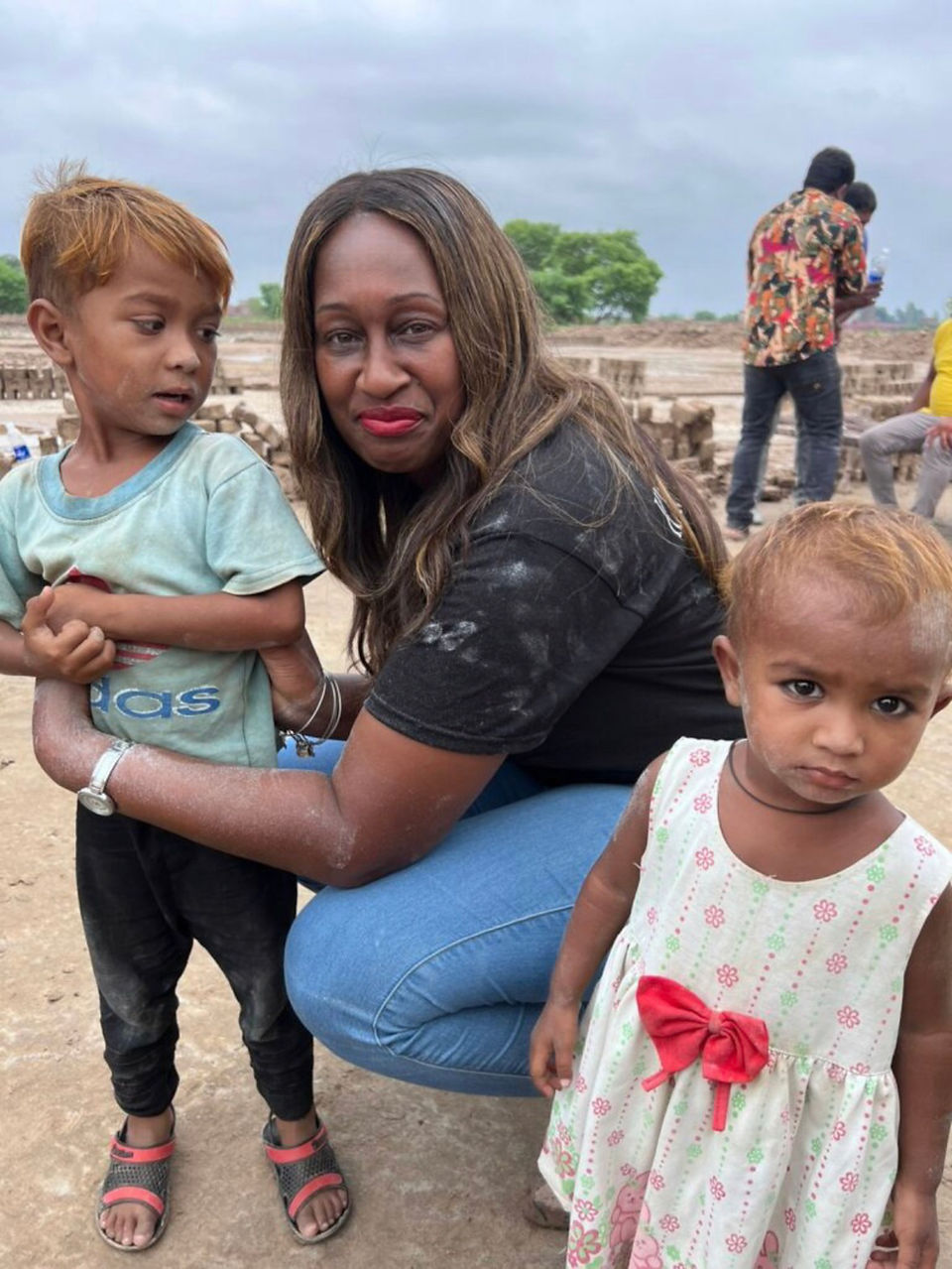
17. KM International Inc., your non-profit, reflects your commitment to serving communities beyond the security profession. Can you tell us about its mission and why that work is so important to you?
“KM International Inc. was designed to help underserved communities which consist of women, youth, people who are financially illiterate, and for those who look hunger in the face everyday who can't afford to eat a hot meal. These individuals don't have access to the resources my private clients do — survivors, people who are still living in silence. Our mission is to bring safety, education, advocacy, and support to the people who need it most but can least afford it. It matters to me because God blesses you to bless others so I'm happy to contribute what I can for those who can't.”


18. Education appears to be at the heart of everything you do. Why is helping people become their own first line of defense just as important as protecting them?
“Because I can't be everywhere, and neither can any security team. But awareness — that goes with you everywhere can. If I teach a woman to trust her instincts, read a room/situation, and know when to remove herself, I've given her a form of protection that never runs out and never needs a renewal on a contract. That's the most powerful thing I can give any woman.”
🌍 Industry Insights & The Future of Security
19. When you look at the next generation of security professionals, what qualities do you believe will define the industry's future leaders?
“Emotional intelligence, first and foremost. This industry has operated for too long on the assumption that toughness is the only qualification. The next generation of leaders needs to understand trauma, read people beyond the threatening behavior, and lead with empathy without losing precision. Adaptability matters also the threats that we see today are not the threats we'll be facing in five years.”
20. Technology continues to transform the landscape. Which developments excite you the most and where do you see the greatest challenges?
”I'm excited about how technology is making risk assessment more precise — predictive tools that help identify patterns before they become incidents. The challenge is making sure technology never replaces human intuition and discretion. A camera can flag a person. It can't read intent the way a trained human can. My concern is an industry that leans so hard into technology that it loses the instinct that's kept people safe for generations.”
💡 Advice for Security Professionals
21. If you could change one misconception that the public has about invisible protection, what would it be?
“That it's only for celebrities and billionaires. Protection is for anyone who has assessed a real risk to their safety — a survivor of abuse, a public figure facing threats, a woman being stalked. Invisible protection isn't about status. It's about need.”
🎯 Final Thoughts
22. Finally, when people look back on your career years from now, what legacy do you hope Kenyatta McKinnon would have left on the security profession and the lives of those you've helped?
“I hope they remember that I turned some of my worst chapters in life into someone else's protection. That I proved safety and freedom aren't opposites they can co-exist in the same room. And I hope every woman who ever sat across from me, whether as a client, a mentee, friend, woman, family or someone in one of my audiences. I pray that they walked away knowing that they were never as powerless as I once felt. That's the legacy. Not the company, not the title but, for women to have a voice, not be afraid, and always feel empowered.”
A huge thank you to Kenyatta McKinnon for sharing her expertise and powerful insights with the Risk Averse Connections community. Her approach to discreet, intelligence-led protection challenges traditional ideas of personal security and demonstrates how preparation, awareness and confidence can empower individuals without compromising their freedom or lifestyle.
To learn more about Kenyatta’s work, visit Top Security Services at https://topsecurityservices.net/, explore the Kenyatta McKinnon Institute of National Organisation Worldwide (KMINOW) at https://kminow.org/, and discover her latest books, training programmes, keynote speaking engagements and executive protection services through her official platforms. You can also connect with Kenyatta on Instagram at @kenyattamckinnon and @topsecurityservices__; explore the ShieldHer community, to access practical guidance, resources and education focused on women's safety, family protection and personal security.
From everyone at Risk Averse Connections, thank you once again, Kenyatta, for contributing to our Guest Q&A series. We look forward to following your continued impact on the executive protection industry and your mission to make personal protection more accessible, more empowering and more effective for people around the world.


Comments